
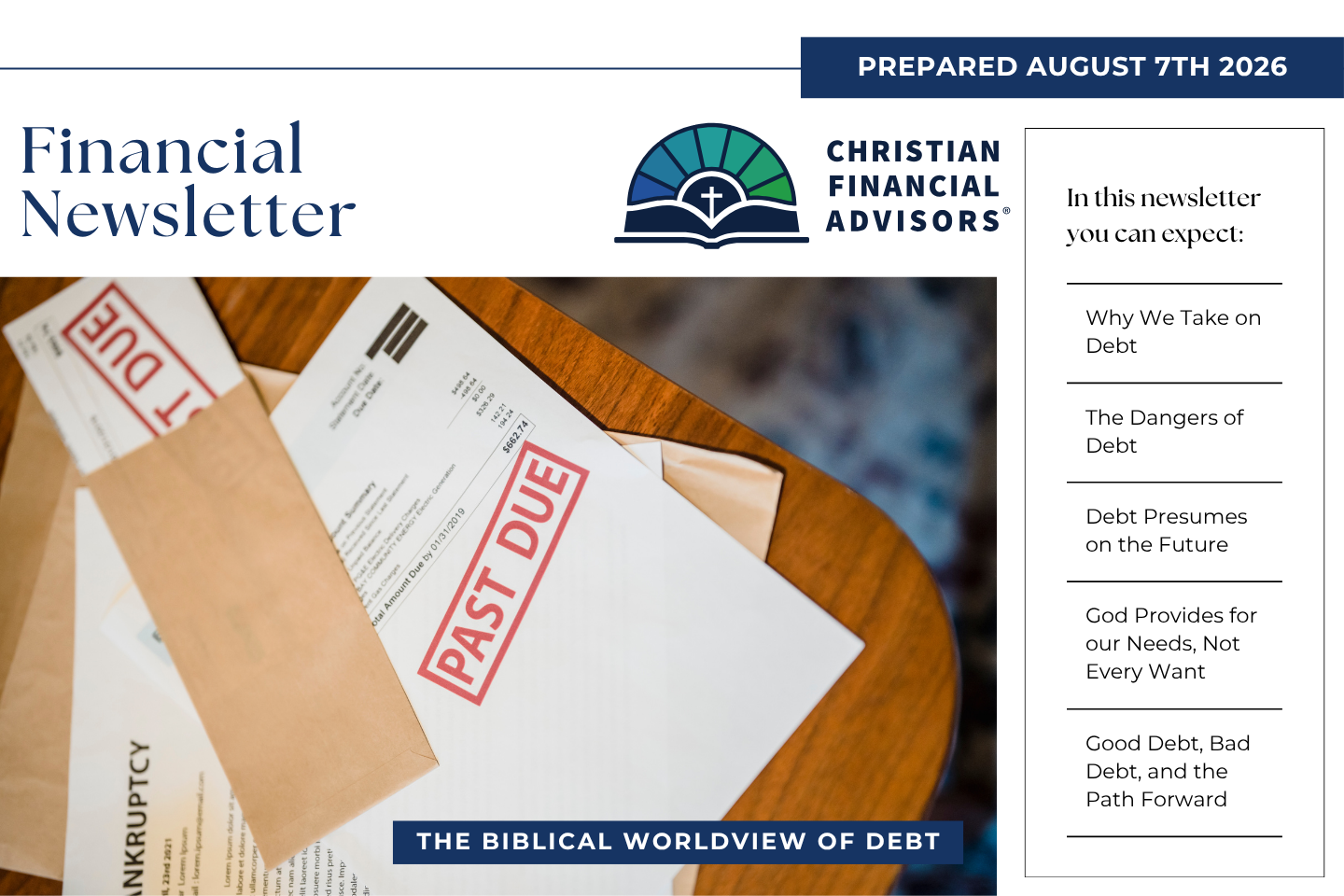
The Biblical Worldview of Debt
Part 6 of 12: A Biblical Worldview of Money and Wealth
Proverbs 22:7 — “The rich rules over the poor, and the borrower is the slave of the lender.”
Debt is not a sin — Scripture makes this clear. But the Bible speaks with remarkable force about its dangers, its spiritual cost, and the freedom found on the other side.
Why We Take On Debt
At its root, debt is the pursuit of today what we haven’t yet earned. It promises instant gratification — the new car, the remodeled kitchen, the vacation — without saving or waiting. More deeply, it can reflect discontentment with what God has provided, blurring the line between wants and needs. They are not the same.
The Dangers of Debt
Debt rarely announces how long it intends to stay. Hours of borrowing can produce years of struggle. High interest makes balances grow even as payments are made. Beyond the numbers, debt fractures marriages, restricts giving and saving, creates chronic stress, and quietly shrinks the portion of our resources available for God’s Kingdom.
Debt Presumes on the Future
James 4:13-15 cuts to the spiritual heart of the issue: “Come now, you who say, ‘Today or tomorrow we will go into such and such a town and spend a year there and trade and make a profit’— yet you do not know what tomorrow will bring. What is your life? For you are a mist that appears for a little time and then vanishes. Instead you ought to say, ‘If the Lord wills, we will live and do this or that.'” Every debt is a pledge against a future only God controls. It presumes His provision is not enough for right now — a posture of distrust, not faith.
God Provides for Needs, Not Every Want
Philippians 4:19 is direct: “And my God will supply every need of yours according to his riches in glory in Christ Jesus.” Note the word need — not want. And 2 Corinthians 9:8 adds depth: “And God is able to make all grace abound to you, so that having all sufficiency in all things at all times, you may abound in every good work.” “All sufficiency in all things” points to the same truth — God’s provision is complete for what we truly need. Debt often arises when we refuse to let that be enough.
Good Debt, Bad Debt, and the Path Forward
Not all debt is equal. Bad debt covers depreciating assets — consumer goods, vehicles, vacations — where you lose value while paying interest. Good debt, such as real estate in a sound location, can build equity that outpaces its cost. Psalm 37:21 reminds us that repayment itself is a matter of righteousness: “The wicked borrows but does not pay back, but the righteous is generous and gives.” If debt has become a burden, Crown Ministries offers excellent biblical resources on budgeting and finding freedom from financial bondage.