

Year End Giving and Tax Strategies

By Bob Barber, CWS®
Did you know that cash assets only represent a small portion of the United States? When most of us give, we only give out of our cash assets from our bank accounts. There’s a reason cash is the most common form of giving. 1) It’s easy; 2) Charities ask for donations in this way; and 3) It fits our model of giving. However, there is so much more to consider if you want to devise a smarter giving strategy.
These two pie charts via IRS Statistics are great examples of representing how assets are given and owned:

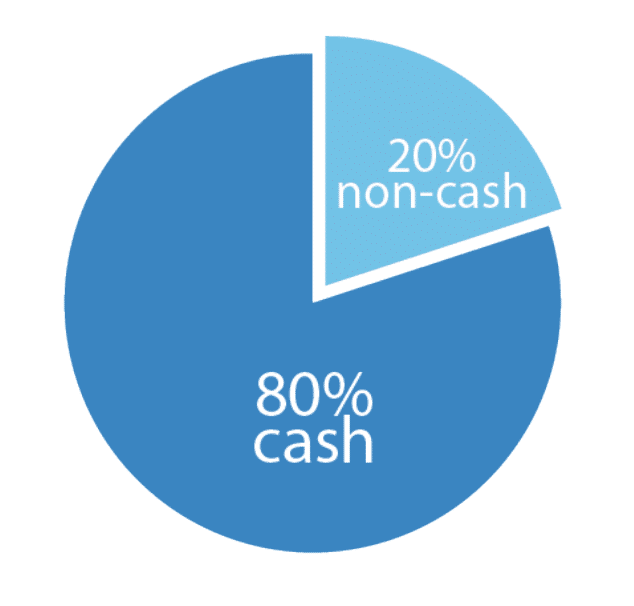
Most of our wealth is actually held in non-cash assets at almost ninety percent! Even though this is the case, the other chart shows that we are giving out of our minimal cash assets. Because of this, our donations are being taken out of a surprisingly small percentage of what we actually own. The result? We are wasting money on taxes and missing opportunities.
RECOGNIZE YOUR GIVING POTENTIAL
We have so much more charitable giving potential than what we recognize. Here at Christian Financial Advisors, we want to help you pinpoint and utilize this potential by guiding you in creating a successful giving strategy to allow you to become a wise steward of your assets, while experiencing the true joy of giving. As Matthew 6:20-21 states, “Store up for yourselves treasures in heaven…for where your treasure is, your heart will be also.”
IN ADDITION TO CASH, CHRISTIAN FINANCIAL ADVISORS CAN HELP YOU GIVE:
– Publicly Traded Securities
– Intellectual Property
– Closely Held Businesses
– Life Insurance
– Real Estate
– Loan Notes
– Limited Partnerships
– Mineral Interests
– S-Corporation Stocks
– LLC Interests
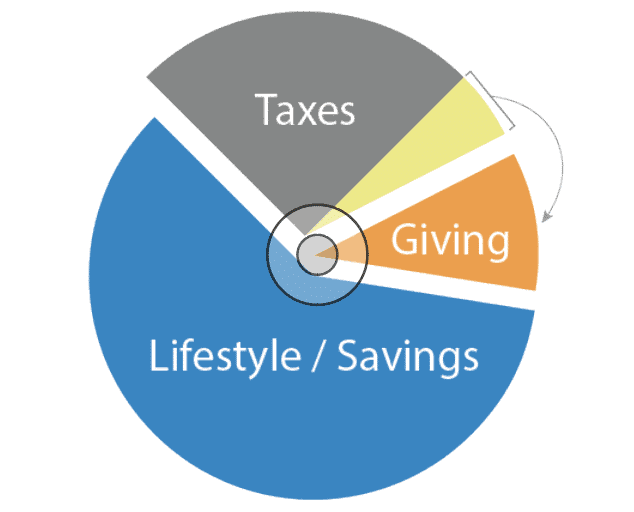
Generous people may increase their giving potential by converting tax dollars into giving dollars when they give from non-cash assets.
WE ENCOURAGE YOU TO ASK THE FOLLOWING QUESTIONS:
What do I give?
What do I own?
Would a smarter giving strategy help?
Could I pay less in tax by giving more wisely?
Are you ready to discover your giving potential? Contact Christian Financial Advisors by calling 830-609-6986 or emailing us at [email protected]. We would love to schedule a meeting by video chat or speak with you on the phone.
* This does not constitute nor does Christian Financial Advisors provide legal or tax advice. You should consult professional advisors concerning the legal or tax consequences of your charitable activities.
The views expressed represent the opinion of Christian Financial Advisors®. The views are subject to change and are not intended as a forecast or guarantee of future results. This material is for informational purposes only. It does not constitute investment advice and is not intended as an endorsement of any specific investment. Stated information is derived from proprietary and nonproprietary sources that have not been independently verified for accuracy or completeness. While Christian Financial Advisors® believes the information to be accurate and reliable, we do not claim or have responsibility for its completeness, accuracy, or reliability. Accordingly, such statements are inherently speculative as they are based on assumptions that may involve known and unknown risks and uncertainties. Actual results, performance or events may differ materially from those expressed or implied in such statements. Past performance is not indicative of future results. For any discussion of equity securities: Investing in equity securities involves risks, including the potential loss of principal. While equities may offer the potential for greater long-term growth than most debt securities, they generally have higher volatility. For any discussion of taxes: Christian Financial Advisors® does not provide tax advice and encourages you to seek guidance from a tax professional.